Recipe
From Bengal's Pujas to Bay Area Tables: Amita's Deviled Eggs
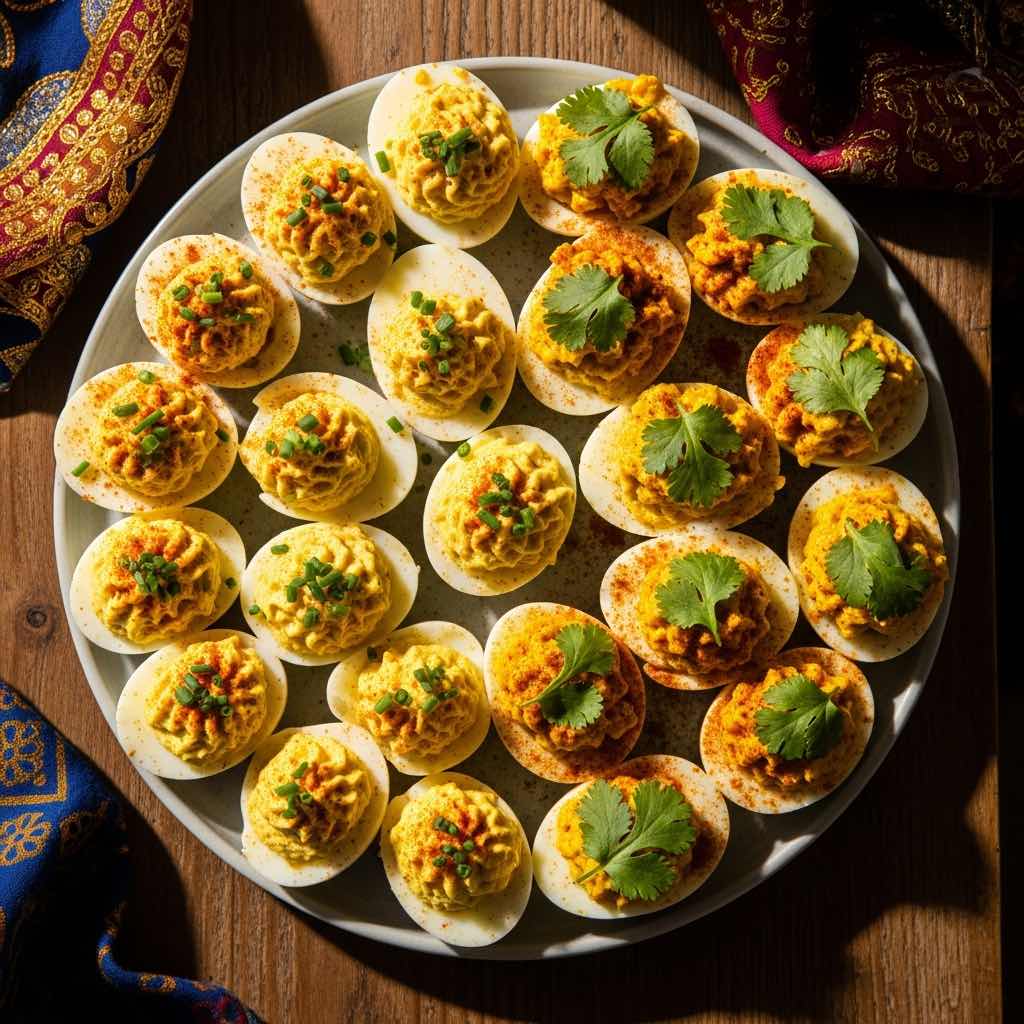
I grew up in India in a Bengali home where festival food felt like a warm chorus of familiar flavors. One of my favorite Puja-time treats was dimer devil — those crispy, spiced, deep-fried egg cutlets that showed up at gatherings and made the whole house smell like celebration. When I moved to the Bay Area as an adult, I wanted to carry that comfort into my new kitchen. Around the same time, I met American deviled eggs at a neighborhood potluck — elegant, creamy, and instantly loved. That’s when I decided to make both worlds meet on one platter.
Today, these deviled eggs are my go-to for Puja gatherings, potlucks, and Sunday brunch. Half classic, half Bengali-spiced — all heart.
What I’m Making
- Classic deviled eggs with Dijon and a whisper of vinegar — smooth, tangy, familiar.
- A Bengali-inspired version with Kashmiri chili, turmeric, and just a touch of mustard oil — bright, warm, and memory-laced.
They sit side by side, like two chapters of the same story.
Ingredients
- 12 large eggs
- Ice for an ice bath
For the classic filling:
- 1/3 cup mayonnaise
- 2 teaspoons Dijon mustard
- 1 teaspoon white vinegar or lemon juice
- 1/4 teaspoon fine salt (or to taste)
- 1/8 teaspoon black pepper
- Optional: 1 teaspoon honey for a soft, round finish
For the Bengali-inspired filling (add to the classic base):
- 1/2 teaspoon Kashmiri chili powder
- 1/4 teaspoon ground turmeric
- 1/2 teaspoon mustard oil (kachi ghani), to taste
- Chaat masala, for dusting
- Fresh cilantro leaves, for garnish
- Optional: a sliver of green chili on top
Classic garnishes:
- Sweet or smoked paprika
- Fresh chives or dill
- Microgreens (optional)
Tools I Use
- Medium saucepan with lid
- Slotted spoon
- Bowl for ice bath
- Sharp knife
- Mixing bowl and fork (or a fine-mesh sieve for ultra-smooth filling)
- Piping bag with star tip (or a zip-top bag with the corner snipped)
Step-by-Step: My Method
- Boil the eggs gently
- Lay the eggs in a single layer in a saucepan and cover with cold water by about an inch.
- Bring to a rolling boil over high heat. The moment it boils, turn off the heat, cover, and let sit for 12 minutes. This timing gives tender whites and velvety yolks.
- Shock and chill
- Move eggs to an ice bath and chill at least 5 minutes. This stops cooking and makes peeling kinder to your patience.
- Peel with care
- Tap to crack all over, roll gently, then peel from the wider end where the air pocket lives. If needed, peel under a thin stream of water to help lift the membrane.
- Prep the halves
- Slice eggs lengthwise with a clean, sharp knife (wipe between cuts).
- Pop yolks into a bowl and set the whites on a platter. I sometimes rest them on a few lettuce leaves to keep them from sliding.
- Make the classic filling
- Mash yolks with a fork until fine (or press through a sieve for silk-smooth texture).
- Mix in mayonnaise, Dijon, vinegar/lemon, salt, and pepper. Taste and tune: more acid for brightness, more mayo for richness, a touch of honey if you want a rounder finish.
- Texture cue: it should hold a soft swirl — think thick, luxurious hummus.
- Mix the Bengali-inspired filling
- Take half of the classic filling and fold in Kashmiri chili and turmeric.
- Add mustard oil drop by drop — it’s aromatic and assertive. You want a fragrant warmth, not a shout. If mustard oil isn’t your thing, a tiny dab of Dijon + mustard powder can nod to the flavor.
- Pipe and garnish
- Pipe generous swirls into half the whites with the classic filling. Dust with paprika; crown with chives or a dill sprig.
- Pipe the Bengali-spiced filling into the other half. Dust with chaat masala; garnish with cilantro and a micro sliver of green chili if you like a little spark.
- Chill 30 minutes before serving so the flavors can settle into each other.
Chef Notes From My Kitchen
- Egg age matters: Slightly older eggs peel more easily. Farmers market-fresh? Steam for 12 minutes instead of the hot-water method — it helps with peelability.
- Balance is everything: Mustard oil is magic in drops. Start with 1/4 teaspoon, taste, then add a touch more if you want a bigger Bengali hug.
- Silkier filling: Press yolks through a fine-mesh sieve. It’s a tiny extra step with big payoff — like trading cotton for silk.
- If it’s too thick: Loosen with 1–2 teaspoons of mayo or a splash of milk. Too loose? Add a spoon of extra mashed yolk or a teaspoon of softened cream cheese.
- Heat level: Use Kashmiri chili for color and gentle warmth. For more heat, add a pinch of regular chili powder or a fleck of fresh green chili on top.
Ingredient Swaps
- Mayo: Greek yogurt (full-fat) for a lighter tang; add a drizzle of olive oil for body.
- Mustard oil: Mix 1/2 teaspoon neutral oil with 1/4 teaspoon mustard powder as a softer alternative.
- Herbs: Cilantro is classic for the Bengali side; mint is a bright, cool twist.
Serving Ideas
- Puja gatherings and potlucks: Alternate classic and Bengali eggs on a long platter — it’s a visual conversation.
- Brunch at home: Pair with avocado toast, lox, and a simple citrus salad.
- Picnic-ready: Pack in a deviled egg carrier with napkins and a little container of chaat masala for last-minute dusting.
Beverage pairings:
- Masala chai (cardamom-forward) for cozy gatherings.
- Sparkling wine or a crisp pilsner to cut through richness.
- Nimbu pani (Indian lemon soda) for a bright, family-friendly sip.
Make-Ahead and Storage
- Eggs: Boil and peel up to 2 days ahead; keep whole and chilled.
- Filling: Make 1 day in advance; store separately in piping bags or airtight containers.
- Assembled: Best within 24 hours; keep covered and chilled. Any leftovers last up to 2 days (they may bead slightly but still taste lovely).
Why I Love Serving Two Versions
On one platter, I get to tell two parts of my story — festival flavors from my childhood in India and the easy elegance I’ve embraced in the Bay Area. Friends will usually start with the familiar and then reach for the spiced swirl… or the other way around. Either path leads to the same place: an empty tray and happy company.
If you make them, I hope they bring a little Puja glow to your table — wherever your table is.